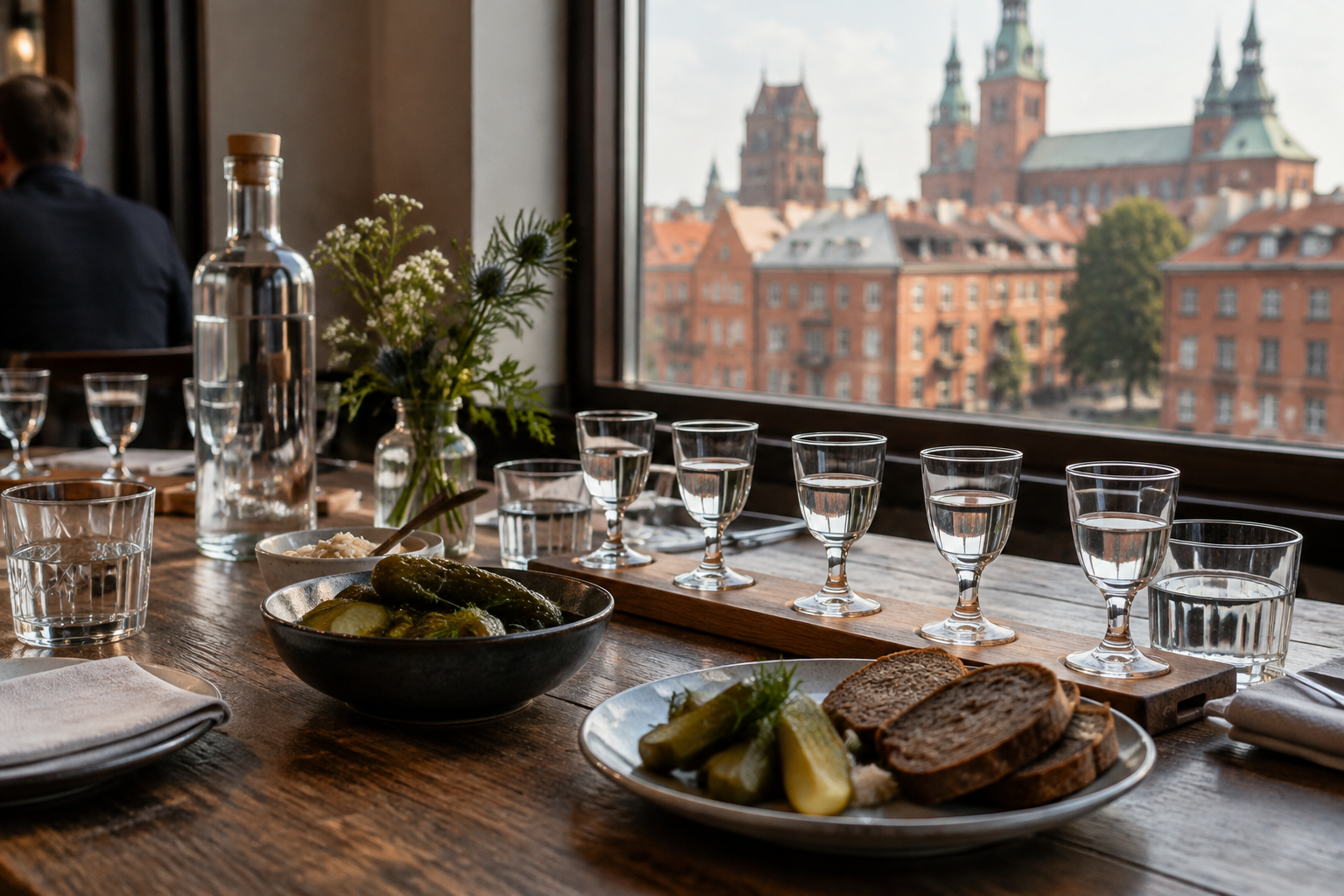
Blind vodka tasting: compare Polish vodkas
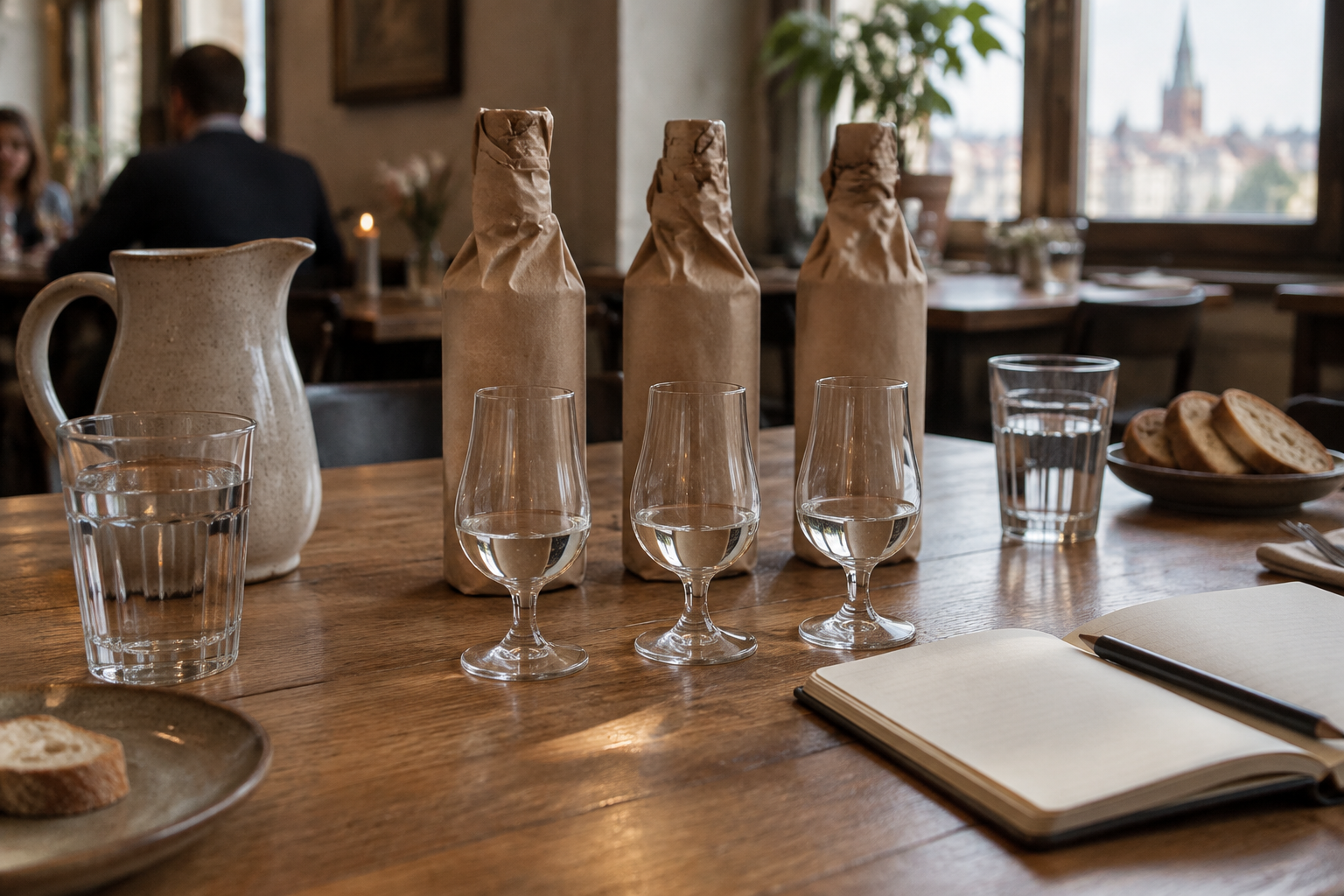
For your first blind vodka tasting, try this: choose three unflavoured Polish vodkas, conceal the bottles and write down your impressions before revealing their names. Make the aim finding your favourite, not identifying every ingredient. This borrows a principle from professional judging: the [International Wine & Spirit Competition serves spirits in numbered glasses](https://www.iwsc.net/spirits/judging-process), keeping the bottles out of sight. The method below is a suggested small-group exercise, not a professional examination. For background on flavour itself, start with our guide to [what vodka tastes like](/news/what-does-vodka-taste-like/). Here, the job is more practical: setting up a comparison that gives each glass a fair hearing.
Why taste vodka blind?
Choose Polish vodkas with a clear comparison in mind
Set up the glasses, water and tasting space
How to taste vodka and write useful notes
- Aroma: faint or noticeable; any specific association you can name.
- Flavour: what you notice in the mouth, without borrowing someone else’s description.
- Texture: your impression of weight, viscosity and alcoholic warmth.
- Finish: what remains afterwards and how long it seems to last.
- Preference: your favourite sample, with one concrete reason.
Reveal the bottles without rewriting your opinion
Make a group vodka tasting work for everyone
Sources
- IWSC: Spirits judging process
- IWSC: Dawn Davies MW on objective spirits evaluation
- Chopin Vodka: Individual Collection
- WSET: Is glassware as important for spirits as it is for wine?
- WSET: How to prepare your palate for tasting
- WSET: Understanding flavours in gin
- WSET Level 3 Systematic Approach to Tasting Spirits
- WSET Diploma tasting guidance, including spirits comparison and dilution
Book a Polish vodka tasting or tour.
Choose a seated tasting or a guided tour in Warsaw, Krakow, Gdansk, Wroclaw or Poznan.
Choose your city →