News & guides · 27 October 2026 · 5 min read
Vodka tasting in Krakow: a private group guide
Choose a vodka tasting in Krakow by what you want to understand, not by how many glasses appear in the photograph. Our recommendation is to look for a clear explanation of the bottles, time to compare them, food with a purpose and arrangements that suit everyone in your group. Before booking, ask what makes the selection interesting. Comparing ingredients, noticing texture and discussing a food pairing gives the evening a point beyond working through a tray. A longer line of glasses is not, by itself, a syllabus.

Choose a private tasting that fits your group
Start with the format. VodkaTasting.pl’s Krakow private group experiences include a seated tasting at one central venue and a guided tour across three venues. Both include Polish food and explanations of vodka history and drinking culture. Non-drinkers are welcome, with non-alcoholic alternatives arranged where possible.
For a group that wants to ask questions and compare bottles, we would lean towards the seated option. Choose the tour if changing venues is part of the appeal. Neither needs to become a competition, and the choice should not depend on persuading everyone to drink.
Ask about the practical details before committing: seating for the whole group, steps or stairs, walking between stops and the language used by the guide. Request confirmation rather than assuming a central venue will meet every access requirement. For a company group or mixed-interest celebration, make conversation and comfortable participation your priorities.
Look for a vodka selection with something to compare
We recommend asking for a comparison of base ingredients, rather than choosing entirely by familiar brand names. There is a concrete model for this: Polish producer Chopin makes potato, rye and wheat vodkas. The producer describes its potato expression as creamy and full-bodied, its rye as peppery, and its wheat as lighter with subtle sweetness. Those are the brand’s descriptions, not a guarantee of what you will taste.
Use that example to ask a better booking question: can the guide explain how the selected bottles differ? A useful answer should name ingredients or production choices, not simply describe everything as premium. WSET’s guide to vodka production and tasting explains that subtle differences can remain after distillation and filtration.
Treat a suggested comparison as a request, not a promised bottle list. Ask which styles are planned and whether substitutions might be necessary. If flavoured spirits are included, ask the host to distinguish them from the unflavoured examples. For background before the session, read our guide to what vodka tastes like.
How to taste vodka without making it an exam
Use a simple framework: aroma, taste and texture. WSET distinguishes the basic tastes detected by the tongue from aromas and tactile sensations such as weight, heat and mouthcoating texture. Its palate preparation guide also stresses the value of smelling before tasting.
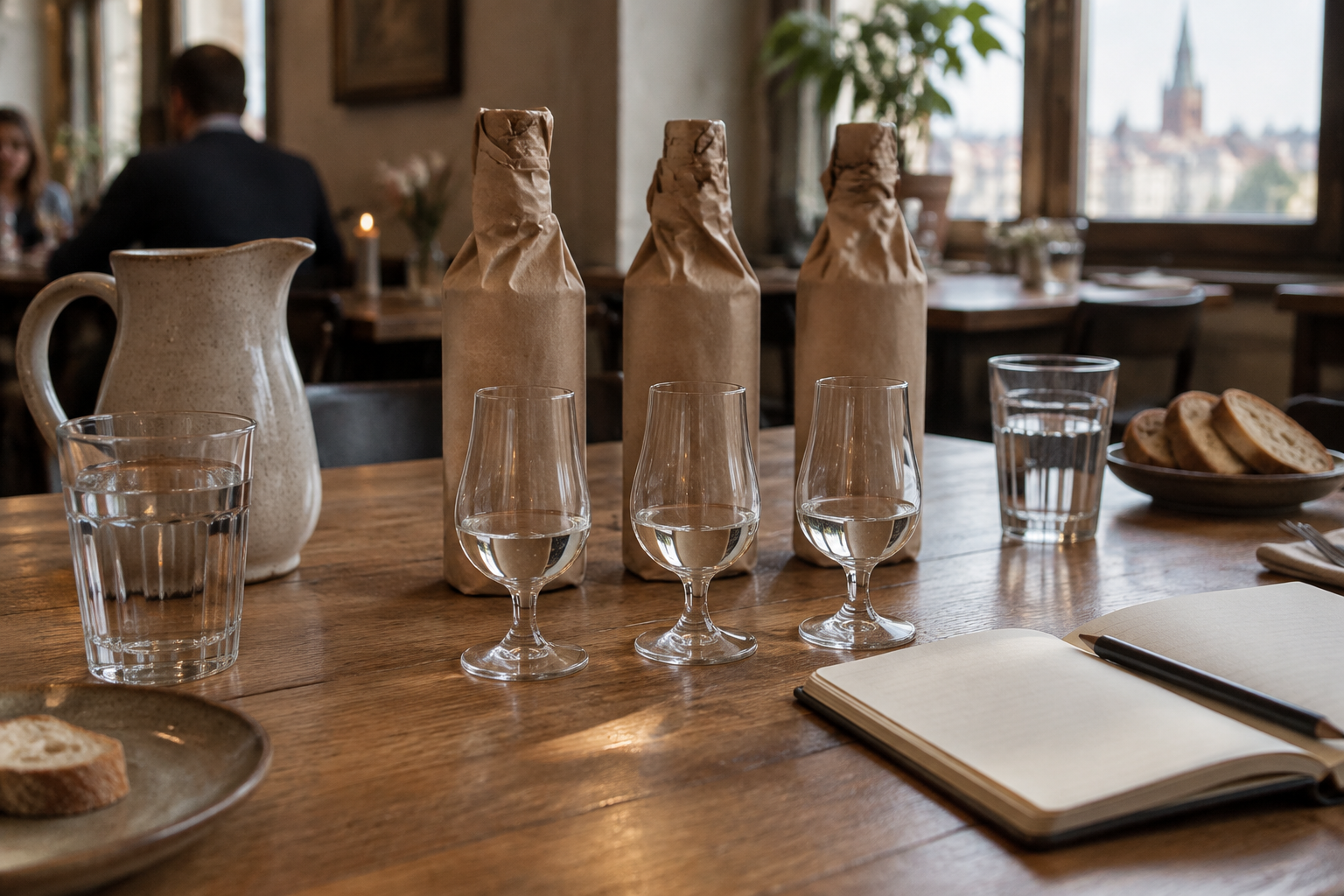
Try this short exercise with two samples:
This is a suggested exercise, not a test with an answer sheet. If your note is simply “I prefer the second one”, ask the guide to help you explain why.
- Smell each glass before taking a small sip.
- Write one observation about aroma and one about texture.
- Compare the glasses using ordinary words: lighter, fuller, sweeter-seeming or sharper.
- Decide which you prefer before hearing everyone else’s verdict.
This is a suggested exercise, not a test with an answer sheet. If your note is simply “I prefer the second one”, ask the guide to help you explain why.
Temperature is worth discussing, too. WSET notes that some drinkers prefer vodka well chilled, while others favour a more moderate temperature. Ask why the host has chosen a particular serving temperature. For your own comparison, request similar conditions for both samples rather than comparing one icy glass with another that has been sitting out.
There is no need to finish every sample. Leave anything you do not want, ask for water and take a break whenever you wish.
Ask what food is included, not just whether there is food
Ask for the proposed menu and make clear whether you intend to eat dinner separately. Do not treat the word “snacks” as a meal plan. Send dietary requirements in advance and ask which alternatives can actually be provided, rather than relying on an unspecified platter.
For a tasting exercise, we suggest trying the spirit before the food, then considering the pairing. Strong or lingering flavours can mask more delicate characteristics, and plain bread can help remove lingering flavours, according to WSET’s guidance on preparing your palate. That gives you a reason to keep the initial comparison simple.
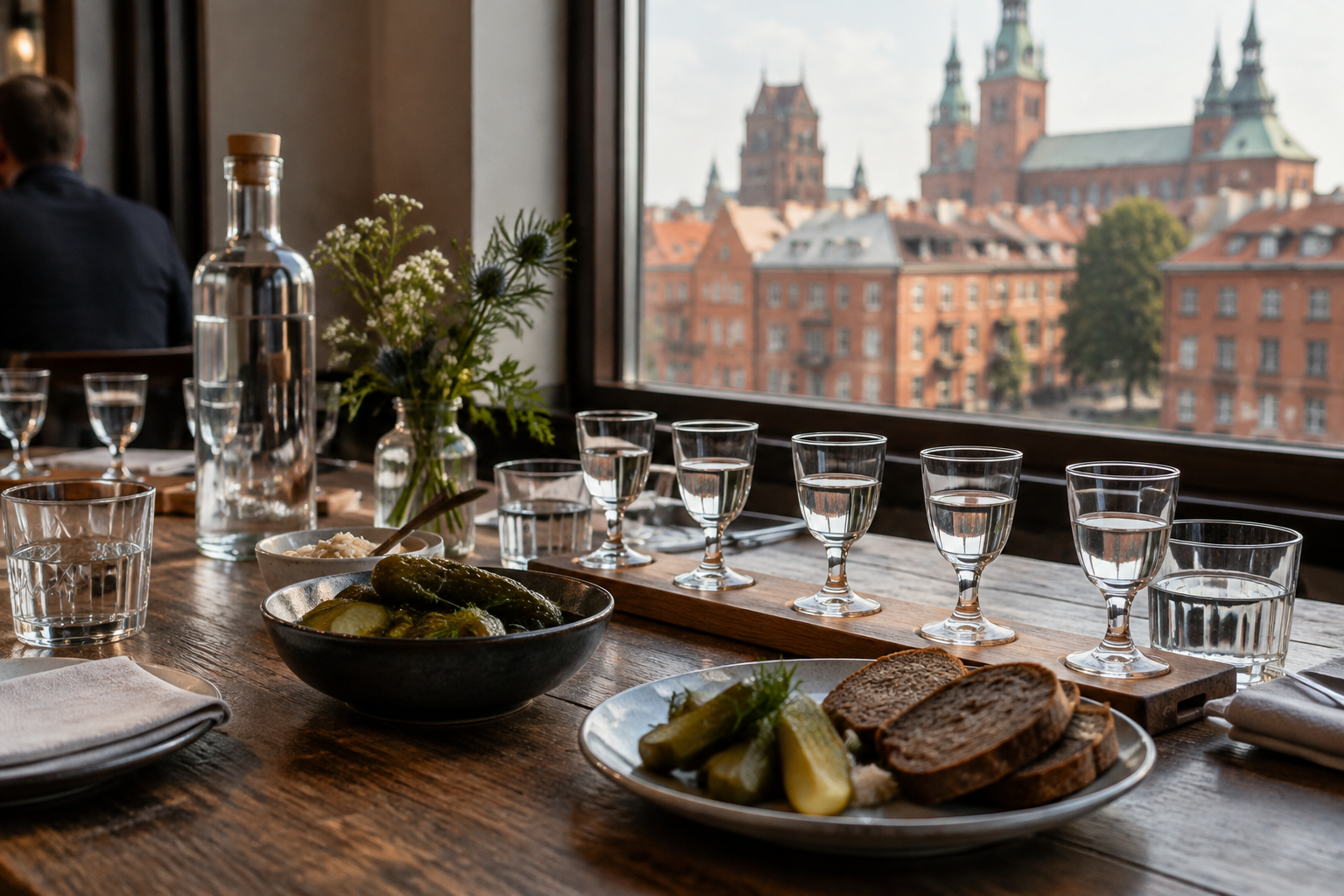
Then enjoy the food as part of the session rather than treating it as laboratory equipment. WSET suggests smoked fish and soft cheese as possible vodka pairings; consider those ideas for discussion, not a universal matching rule or a promised menu. Our guide to traditional Polish vodka snacks offers more background for choosing what interests your group.
Give the tasting a connection to Krakow
Ask for local history alongside the bottle explanations. Krakow has a substantial vodka-production story to draw on: the Vodka Factory Museum at Fabryczna 13 presents historical distilling equipment, an agricultural steam distillery, bottling displays and material about the former Polmos Krakow operation.
That gives you useful subjects to raise with a guide. Ask how industrial production differed from earlier distilling, what a bottling line tells you about scale, or how the history of a factory relates to the brands on the table. These are more revealing questions than asking for a single supposedly definitive national favourite.
If production machinery is the main attraction for someone in your group, consider the museum as a separate visit. Its exhibition covers production methods, historical objects and multimedia displays, as described by the museum itself. Do not assume that a bar-based tasting includes a museum visit or access to a working distillery.
What to confirm before booking a Krakow vodka tasting
Send one clear enquiry rather than leaving the organiser to guess what your group needs. Include:
- Your preferred date and group size.
- Your preference for a seated tasting or a walking tour.
- The number of non-drinkers and any requested alternatives.
- Dietary requirements and access needs.
- Your preferred guiding language.
- Any fixed dinner reservation or activity afterwards.
Ask for confirmation of the meeting point, duration, food arrangements and what is included. Our frequently asked questions are a useful place to begin; put anything specific to your group in the enquiry. Keep the aim straightforward: an introduction to Polish culture, history and food, with room to notice what is in the glass, not an exercise in getting drunk.
To arrange your group’s visit, see our private vodka tasting in Krakow and send your preferred date and requirements.
Taste it for yourself
Book a Polish vodka tasting or tour.
Choose a seated tasting or a guided tour in Warsaw, Krakow, Gdansk, Wroclaw or Poznan.
Choose your city →