News & guides · 24 September 2026 · 5 min read
Is Goldwasser actually vodka? The truth about Gdańsk's famous gold liqueur
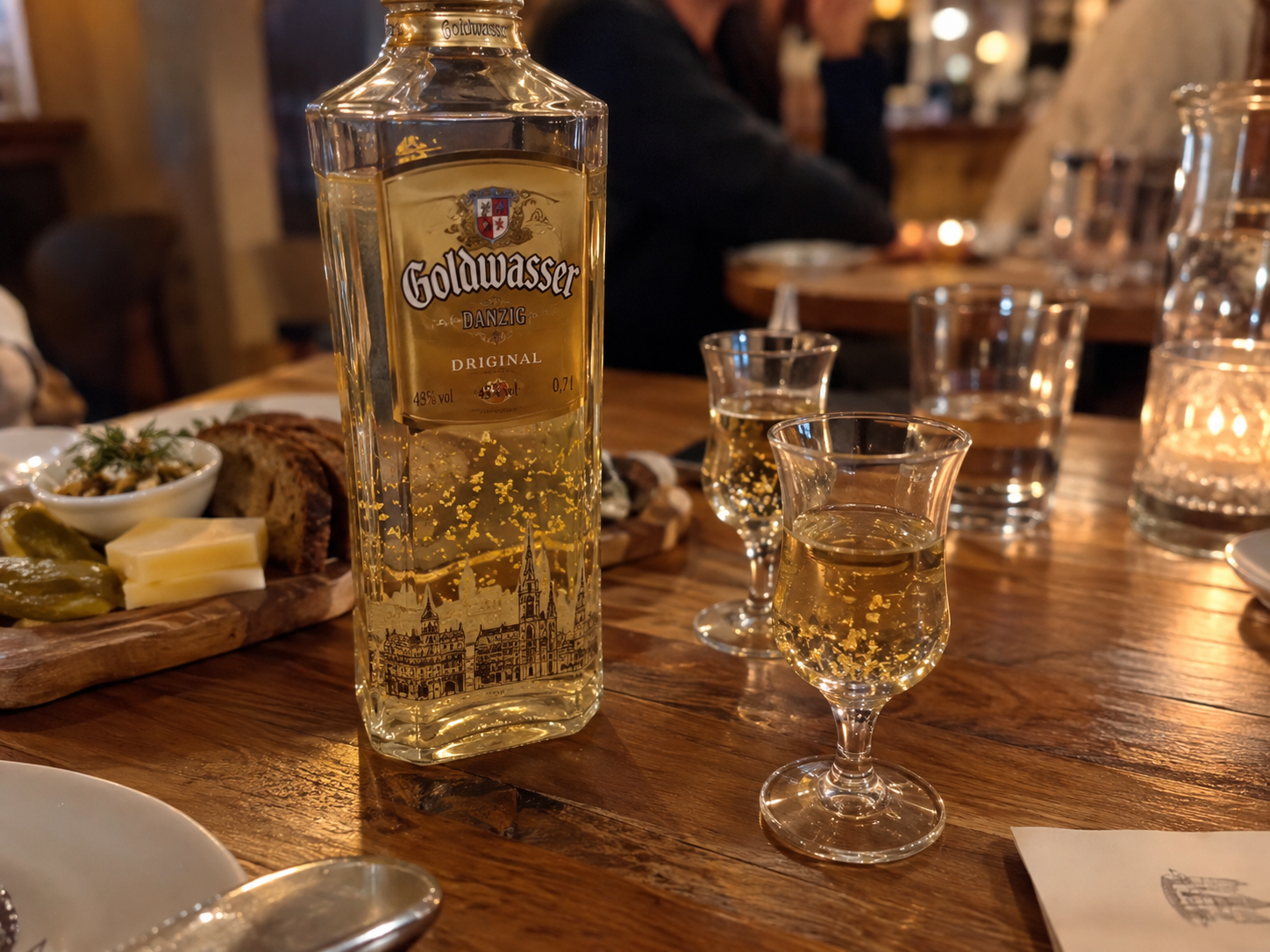
See a bottle of Goldwasser in Gdańsk and the first question is usually not "what does it taste like?" It's: is that actual gold floating in there? Yes. The second question is more complicated: is Goldwasser actually vodka? Not really — at least not by the modern definition.
So what is Goldwasser?
Goldwasser, literally "gold water", is a strong herbal and spice liqueur associated with Gdańsk for more than four centuries. It is flavoured with herbs and spices and contains tiny flakes of real 22-karat gold. Historical recipes were complex, using ingredients such as juniper, rosemary and various roots and spices; today's exact original recipe is kept secret.
Modern versions are strong, too. Goldwasser served in Gdańsk today is typically around 40% ABV — roughly the same strength as many vodkas. But alcohol percentage alone doesn't make something vodka.
So... why isn't it vodka?
Under EU law, vodka is its own defined category of spirit. It must be made from agricultural alcohol and have at least 37.5% ABV. Its rules also severely limit what can be added: vodka cannot simply be sweetened and flavoured with a mixture of herbs and spices in the way a liqueur can. (For the basics of what makes Polish vodka Polish, see Polish vodka, explained.)
A liqueur, on the other hand, is a sweetened spirit to which flavourings, agricultural products or foods may be added. EU rules generally require liqueurs to contain at least 100 grams of sweetening products per litre, with certain exceptions for specific types.
And that's the category Goldwasser belongs to: a herbal-spice liqueur, not a clear vodka. So why do you sometimes see it described as Gdańsk vodka or even gold vodka? Because historically, the Polish word wódka was used more broadly than today's precise legal category. Encyklopedia Gdańska itself describes Goldwasser both as a traditional wódka gdańska and, more specifically, as a herbal-spice liqueur.
Both descriptions make sense in their historical context. On a modern bottle label, though, liqueur is the accurate one.
And yes, the gold is real!
The flakes aren't plastic glitter or a clever optical trick. Gold is authorised in the EU as the food colour E175, including for use in liqueurs. They're mostly there for the spectacle. Shake the bottle and the flakes swirl through the liquid, which is exactly why Goldwasser has been such an effective luxury drink for centuries.
It is difficult to make a bottle look more expensive than putting literal gold inside it!
A very Gdańsk drink
Goldwasser's history is tied closely to Ambrosius Vermöllen, a Mennonite merchant and liqueur producer who came from the Low Countries and became a citizen of Gdańsk in 1598. His business later became associated with Der Lachs — "The Salmon" — on today's Szeroka Street, one of the city's best-known historic distilleries.
The story becomes slightly more complicated after the Second World War. Goldwasser continued to be produced in Poland under the state monopoly, but that production stopped in 2009. The company holding the historic Der Lachs recipe produces Original Danziger Goldwasser in Germany today.
Should you try it in Gdańsk?
Absolutely — particularly if you've never tried Polish herbal or flavoured spirits before. Just don't expect it to taste like regular vodka. Goldwasser is aromatic, spicy and sweet, with much more going on than a classic clear rye or potato vodka.
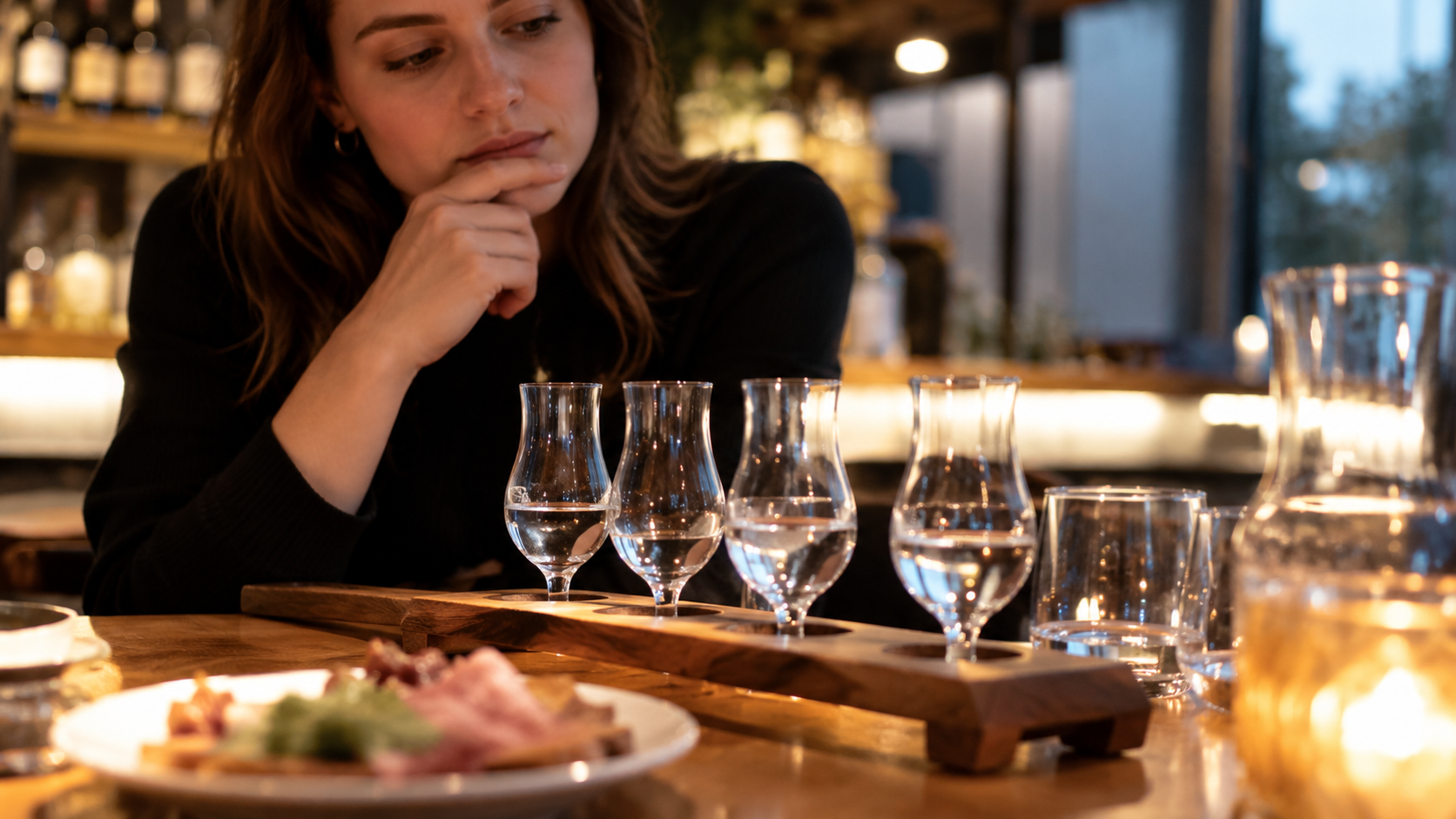
Better still, try it alongside other Polish spirits so you can actually taste the difference. That's exactly the kind of comparison we make on our Gdańsk Vodka Tasting and Vodka Tour — because Goldwasser makes considerably more sense once you've tasted what actual Polish vodka is like too. Wondering whether a guided tasting is for you? Read Is a vodka tasting worth it?
Taste it for yourself
Two ways to discover Polish vodka.
Choose a seated tasting or a guided tour in Warsaw, Krakow, Gdansk, Wroclaw or Poznan.
Choose your city →