News & guides · 24 November 2026 · 5 min read

    Learn more about the blade of grass in Żubrówka vodka

    The blade of grass inside Żubrówka Bison Grass is not the whole flavouring system. The producer describes making an extract from prepared grass and blending that extract with spirit. In other words, the important work happens before you open the bottle, not while a lonely stalk sits on your drinks shelf. [CEDC’s account of production](https://www.cedc.com/aktualnosci/odkryj-legende-limitowana-odslona-zubrowki-bison-grass/) makes that distinction clear. For anyone choosing a Polish vodka to try, that is a useful starting point. Look beyond the bottle decoration and there is a much better story: a particular plant, a regional production method and a flavour worth examining before reaching for the apple juice.
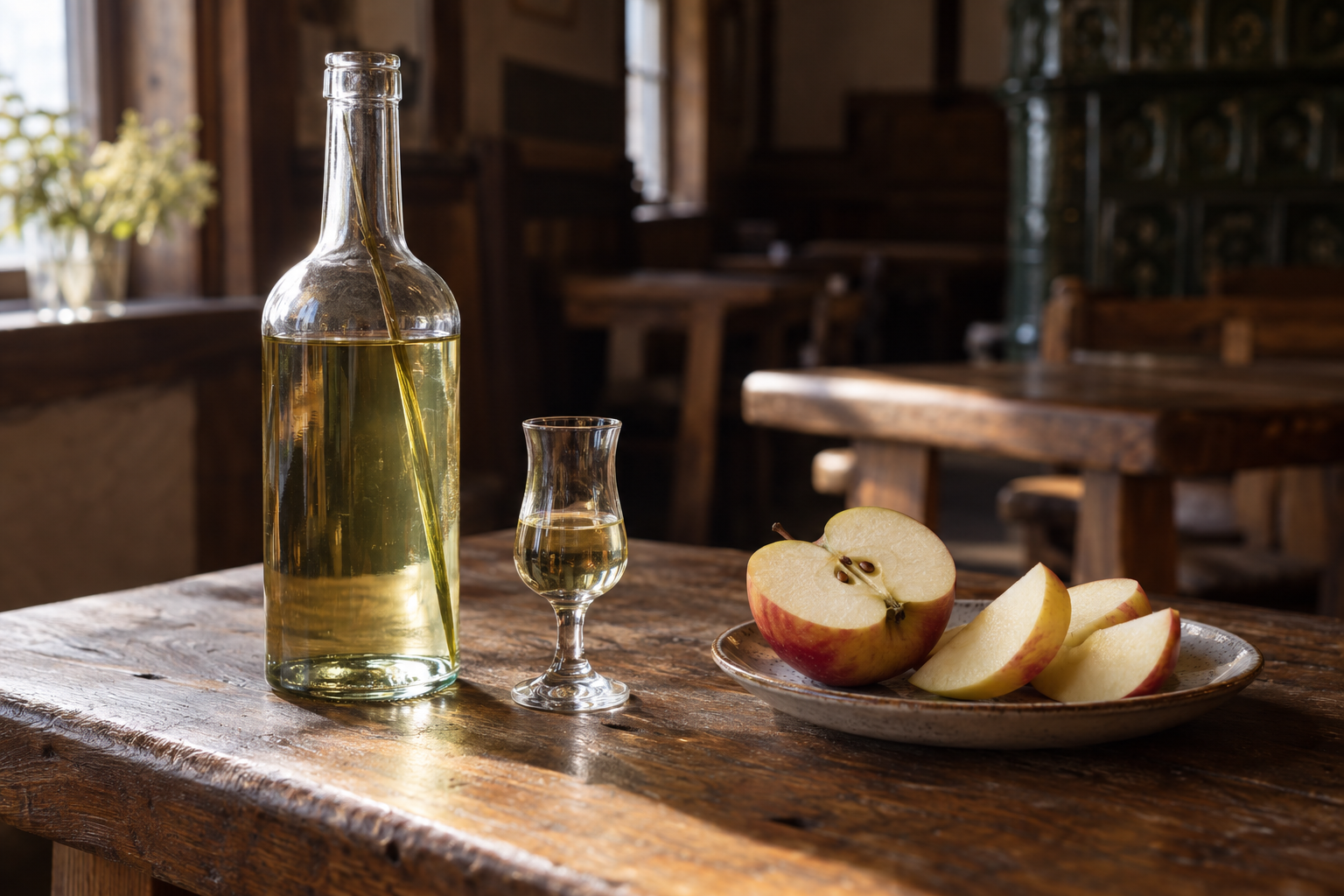
    An unlabelled bottle of pale bison-grass vodka beside a tasting glass and sliced apple

    Bison grass comes with a real place attached

    The forest connection is not invented scenery. Białowieża Forest straddles Poland and Belarus, and UNESCO recognises it for its extensive old-growth woodland and biodiversity, including European bison. That makes it a real landscape worth understanding, rather than simply an attractive background for a bottle label. UNESCO’s description of Białowieża Forest is a useful corrective to the advertising version.
    The plant deserves equal attention. Researchers at Warsaw University of Life Sciences describe southern sweet-grass, *Hierochloë australis*, as a grass whose leaves contain coumarin compounds responsible for their distinctive sweet aroma. Their study identifies flavouring alcoholic drinks as an important Polish use of those leaves. This is an aromatic ingredient, not ordinary lawn grass with an impressive surname. The university researchers’ paper examines the plant itself.
    The same researchers warn about excessive wild collecting and discuss cultivation as a way to reduce that pressure. My practical advice is simple: buy the finished drink; leave botanical collecting out of the holiday itinerary. Research on cultivation and wild harvesting.

    The flavour is prepared before the blade goes in

    The regional product specification gives a more revealing account than the bottle does. Grass is soaked in a heated, circulating mixture of alcohol and water for three days. This produces a *macerate*: a liquid carrying compounds extracted from the plant. Batches are blended, rested in oak casks for a month, then filtered. The official specification sets out these stages.
    That detail needs careful reading. It is the concentrated macerate that spends time in oak, not necessarily the finished bottle of vodka. The specification then describes combining cereal spirit, water, macerate and sugar syrup. Do not read this as a claim that every bison-grass vodka is barrel-aged like whisky. Production method in the technical file.
    Poland’s agriculture ministry calls the stalk in the bottle symbolic. That is the useful distinction: a visible signature of the ingredient, rather than a complete explanation of production. The blade gets the photograph; the extract does the less photogenic work. Ministry publication, page 51.

    What does bison-grass vodka taste like?

    The regional specification describes a herbal, slightly sweet taste, a mildly bitter finish and an aroma of freshly dried hay. Its colour is light green with a golden tint. These are documented characteristics of the protected regional style, not tasting notes invented for a particular bottle. Official sensory description.
    I would use those descriptions as prompts, not answers you must reproduce. Smell a small pour before adding anything. Write down your own impression, then take a small sip if you drink alcohol. Pay separate attention to the aroma, the sweetness on the tongue and whatever remains afterwards. You are making observations, not sitting an exam in hay recognition.
    Keep the plant’s sweet smell separate from the question of sugar. The researchers specifically associate its aroma with coumarin compounds; that does not turn an aroma description into an ingredient declaration. The sweet-grass study explains the chemistry. For the broader distinctions, see what vodka tastes like and the sugar your vodka label may not mention.

    Try the apple-juice serve, but taste the vodka first

    Apple juice is not an arbitrary pairing suggested here. Żubrówka’s own Apple Żu recipe combines Bison Grass vodka with apple juice over ice, garnished with apple slices and optional cinnamon. That is a producer-recommended serve, rather than proof that everyone in Poland drinks it that way. The brand’s recipe gives the ingredients and method.
    For a first encounter, I would start without the cinnamon. Keep the experiment simple: smell the vodka, taste a little if you wish, then try the apple mixture. The question to investigate is which impressions remain recognisable once the juice is involved. Save extra garnishes for another occasion rather than changing everything at once.
    My suggested food companion would be a small piece of apple tart, with the drink served separately. Treat that as a pairing to test, not a national rule. For someone not drinking alcohol, offer apple juice with apple slices and optional cinnamon, without claiming it recreates the vodka’s flavour.

    Buying Żubrówka: read beyond the brand name

    Do not assume that every Żubrówka bottle contains bison-grass vodka. The producer also sells Żubrówka Biała as a clear vodka and lists its composition as water and grain alcohol. If you want the grass-flavoured version, look specifically for Bison Grass rather than relying on the brand name alone. Żubrówka’s Biała product information makes the distinction explicit.
    There is also a difference between a brand and a protected regional product name. The official British register lists ‘Herbal vodka from the North Podlasie Lowland aromatised with an extract of bison grass’ under flavoured vodka. That unusually long name identifies a regional style; it is not simply another spelling of Żubrówka. Defra’s protected-name register records it separately from Polska Wódka / Polish Vodka.
    My buying checklist would therefore be short: confirm the exact variant, read the product description and decide how you intend to serve it. If the geographical terminology is confusing, our article on Polish vodka and its definitions provides further context.

    Bring the ingredient question to a Polish vodka tasting

    For a group tasting, I would ask the host to discuss the difference between flavour from the base spirit and flavour introduced through a botanical ingredient. Bison grass makes a useful subject because you can follow the discussion from plant to extract to finished drink. Ask about the planned selection beforehand rather than assuming a particular brand will be included.
    Keep participation optional. Someone can be interested in ingredients, regional history and food without wanting a glass of spirits. The point should be understanding what is on the table, not finishing everything on it.
    If Warsaw is on your itinerary, you can enquire about a private Warsaw vodka tasting with VodkaTasting.pl. Non-drinkers are welcome, and the focus is Polish culture, history and food, not getting drunk.
    Taste it for yourself

    Book a Polish vodka tasting or tour.

    Choose a seated tasting or a guided tour in Warsaw, Krakow, Gdansk, Wroclaw or Poznan.

    Choose your city →